
Made in our own workshop · Valverde del Camino
From leather to your feet.
Step by step.
Every pair of Lazo y Duque footwear begins in our workshop in Valverde del Camino.
Behind a finished boot are different materials, components and processes that must work together. Selecting the leather, cutting, closing, lasting, attaching the sole, stitching and finishing are all part of a craft in which experience remains essential.
Not all our styles are made in exactly the same way. The type of leather, the last, the sole, the intended use and the construction method determine how each one must be made.
They all follow the same principle: completing each stage properly before moving on to the next.
The starting point
Choosing the right material
for each style.
Good footwear begins before the first piece is cut.
We mainly work with natural leather, selecting the type of material according to the design and purpose of each style. A boot made for long days in the countryside does not need the same characteristics as a riding boot, an ankle boot for everyday wear or a shoe.
We consider factors such as thickness, flexibility, feel, durability and how the leather changes with use.
We also choose soles, linings, threads, zips, buckles and other components according to the specific needs of each product.
Final quality does not depend on a single element. It depends on all of them working properly together.
01–04 · Preparation and construction
The shape emerges
step by step.
 01
01
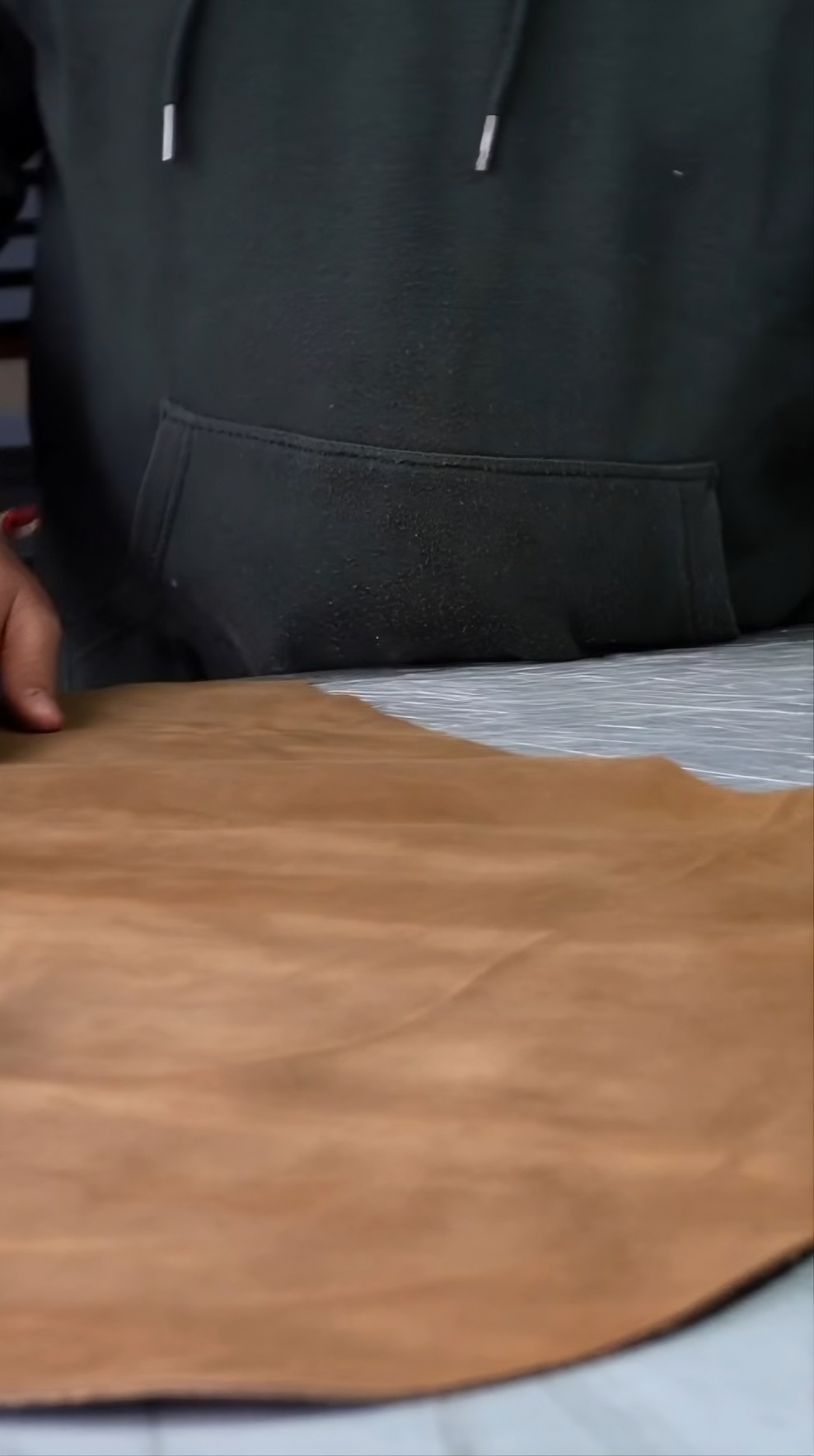
Leather selection
Leather is a natural material, and every hide has its own characteristics.
Before cutting begins, we inspect the material and decide which areas are best suited to each component of the footwear.
The craftsperson’s experience makes it possible to use its qualities effectively while taking account of the natural features that mean no two hides are exactly alike.
This initial selection later affects the product’s appearance, fit and performance.
 02
02
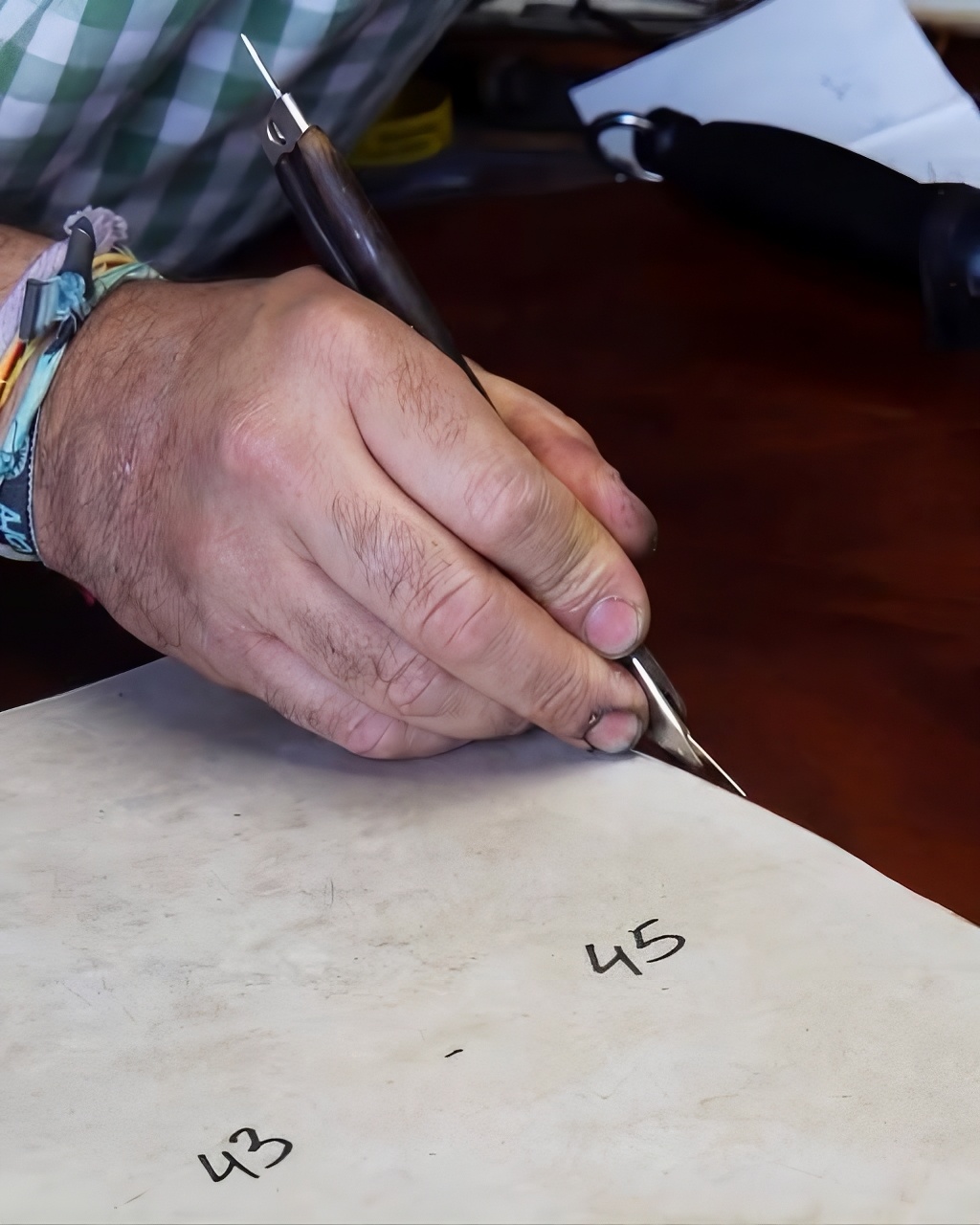
Cutting the pieces
A boot consists of different pieces that must fit together precisely.
Using the patterns for each style and size, we cut the components that will later form the upper.
At this stage, accuracy is as important as choosing the right area of leather.
A good cut makes all the subsequent work easier: it allows the pieces to be assembled correctly and helps preserve the shape intended in the design.
 03
03
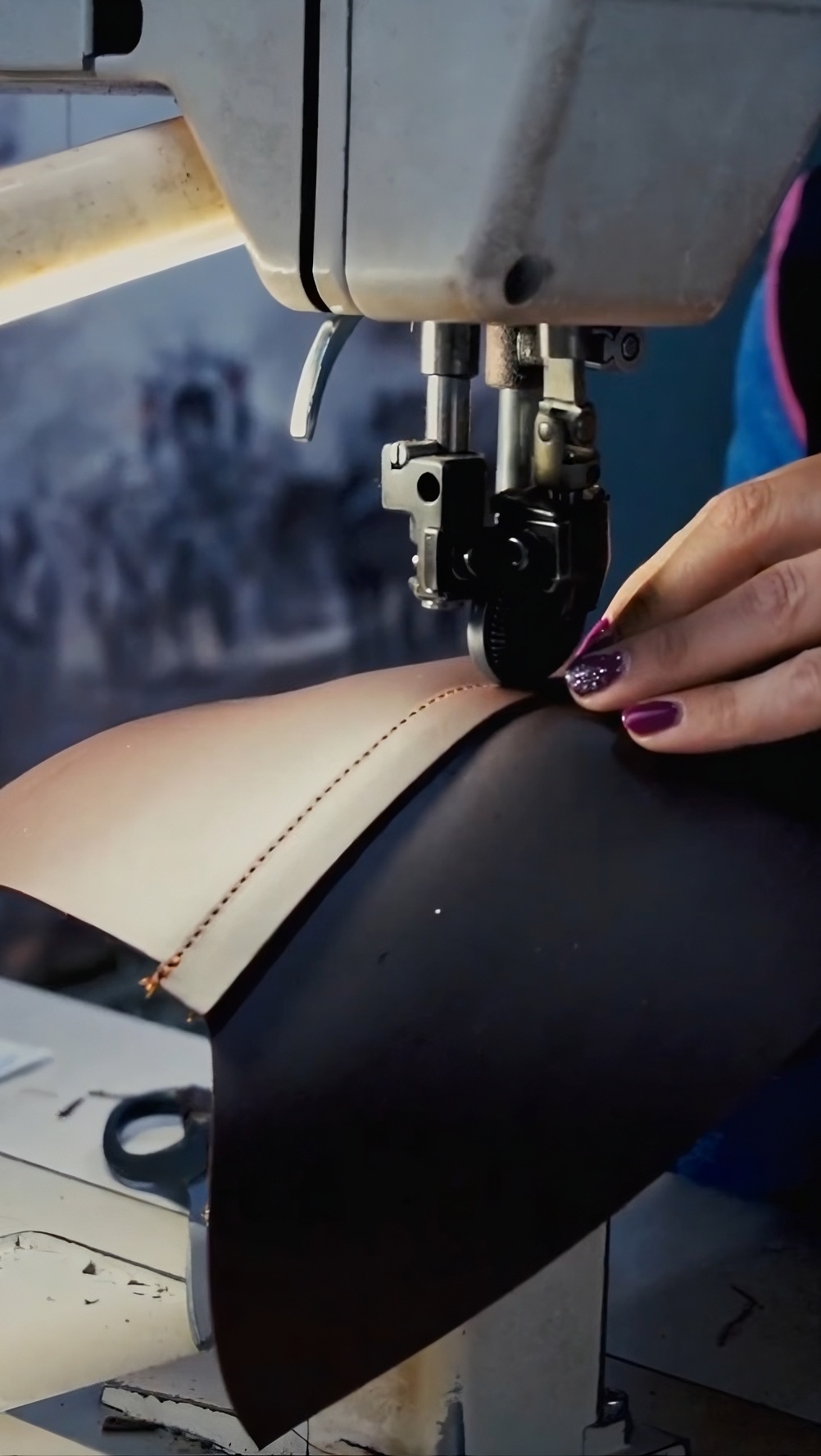
Closing: when the pieces begin to take shape
After cutting comes closing.
At this stage, the different pieces that form the upper are prepared, assembled and stitched.
This work demands precision. The seams are not merely decorative: they help keep the pieces securely joined and define the shape of the style.
Little by little, what had been separate pieces of leather begins to resemble the boot, ankle boot or shoe that will reach the customer.
 04
04
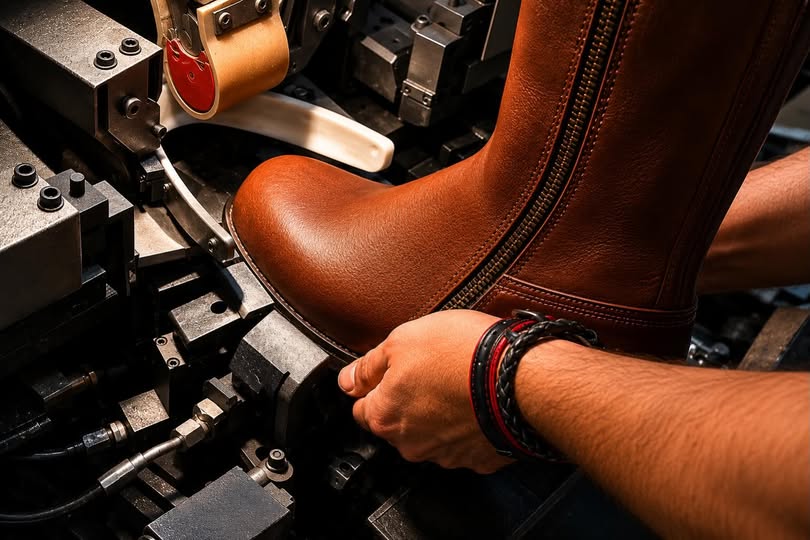
The last shapes the footwear
The last is a fundamental part of the manufacturing process.
The stitched upper is placed over it to give the footwear its volume and final shape.
During this process, the leather must be positioned and adjusted correctly around the last while respecting the design and proportions of the style.
This stage is particularly important for the final fit. The shape of the instep, width, toe and other dimensions depend largely on the last used and on how the lasting is carried out.
At this point, the boot stops being a collection of pieces and becomes a footwear structure.
Traditional construction
Goodyear welted
construction.
For many styles in our collection, we use stitched construction methods traditionally known as welting or Goodyear stitching.
Their purpose is to create a strong bond between the different parts that make up the lower structure of the footwear.
Unlike a construction based solely on adhesives, stitching creates a mechanical thread connection between the components specified for each style.
Many of our product pages include terms such as “double welt stitching” or “Goodyear stitching”, particularly for country boots, outdoor styles, riding boots and other footwear designed to have an especially durable construction.
However, not every Lazo y Duque style necessarily uses the same construction method. The method may vary depending on the design, sole and intended use.
We therefore recommend checking the specifications of each product.
Why do we still use stitched construction?
When a style requires it, stitched construction allows us to create a firm, durable structure and preserve a technique closely linked to our traditional shoemaking.
We do not use stitching as a decorative claim. It is part of how the product is built.
05–07 · Assembly and finishing
Sole, heel
and final inspection.
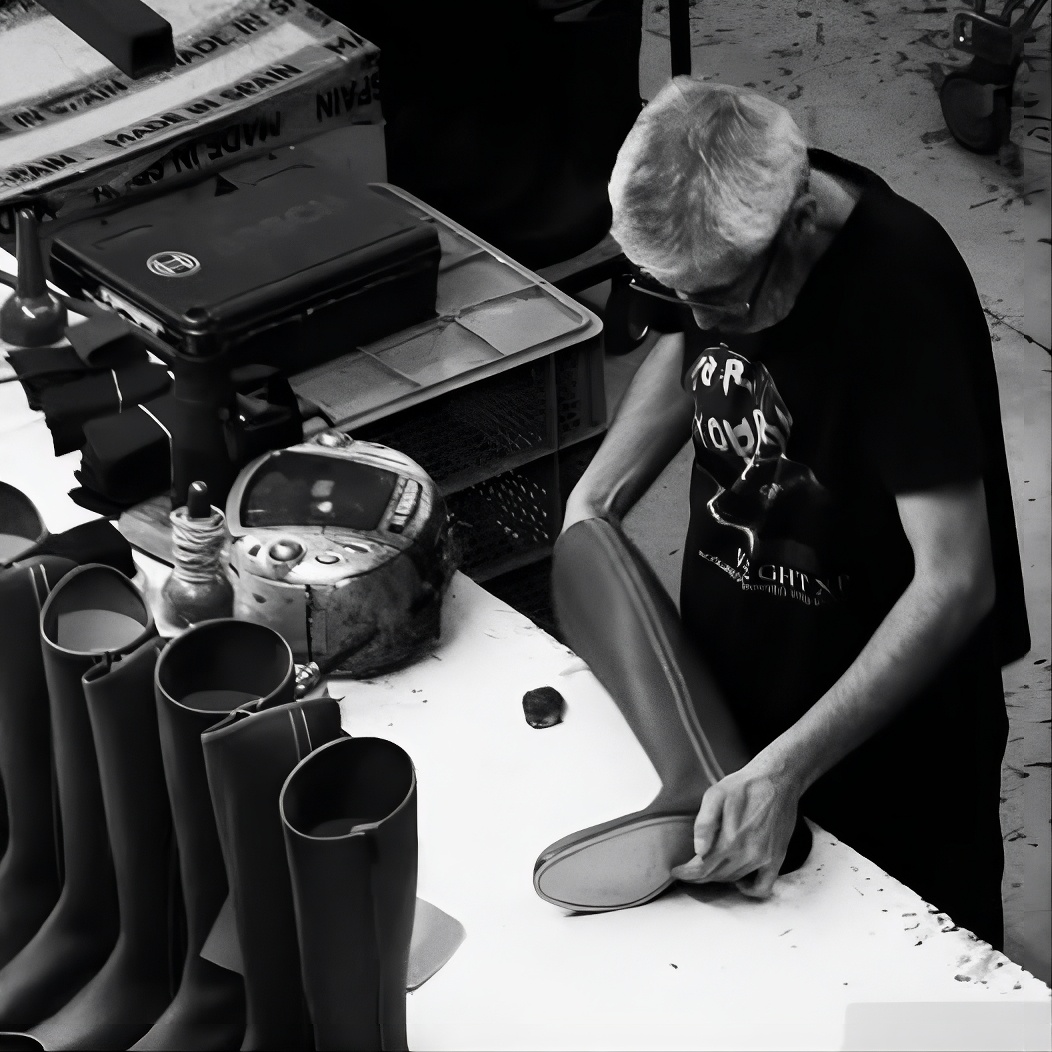
Soles and heels: a different foundation for every use
The type of sole varies considerably from one style to another.
We use different solutions depending on the footwear’s purpose: leather, rubber and other technical soles, chosen according to the required durability, flexibility, grip or appearance.
A boot for countryside activities may need to perform very differently from a shoe or a style intended mainly for dress wear.
The choice of sole is therefore not an isolated decision. It forms part of the product’s overall design.
After the sole has been prepared and fitted using the appropriate construction method, the components needed to complete the base and heel are also added.
Finishing is also part of the craft
Once the footwear is structurally complete, a stage begins in which the smallest details carry particular importance.
We inspect the product’s overall appearance, stitching, leather and different components.
Depending on the material and style, the necessary cleaning, treatment and finishing work is carried out to present the footwear properly.
This is when a technically finished piece takes on its final appearance.
Before leaving the workshop
Before a pair leaves our premises, we carry out a final inspection.
We visually check the whole product, the joints, the finish and the features specific to each style.
The aim is simple: the product received by the customer should be the same product that we would consider ready to leave our workshop.
Handcrafted production does not mean that every pair is identical to an item made by a fully automated process. Leather is a natural material and may display small variations inherent to it.
That is precisely why human inspection remains important until the very end.
Experience before speed
Because knowing the craft
still matters.
Technology, materials and designs evolve, and so do we.
Yet part of the process still depends on something that is difficult to replace: experience.
Knowing how leather responds, recognising when a piece is correctly positioned, making a seam properly and inspecting a finish are skills acquired through practice.
At Lazo y Duque, we have been doing this since 1970.
We do not work this way because we want to look back. We do it because many of these techniques still make sense when the aim is to produce carefully made, durable footwear suited to its purpose.
Tradition and innovation do not have to be opposites.
Our aim is to preserve the knowledge that adds value and continue evolving wherever we can improve.
Everything begins in one place
A way of making footwear rooted
in Valverde del Camino.
This process did not develop in isolation.
It forms part of a shoemaking tradition that has evolved over generations in Valverde del Camino, where the footwear industry has been documented since the nineteenth century and remains one of the town’s defining activities.
Lazo y Duque has been part of that history since 1970.
Discover our history ↗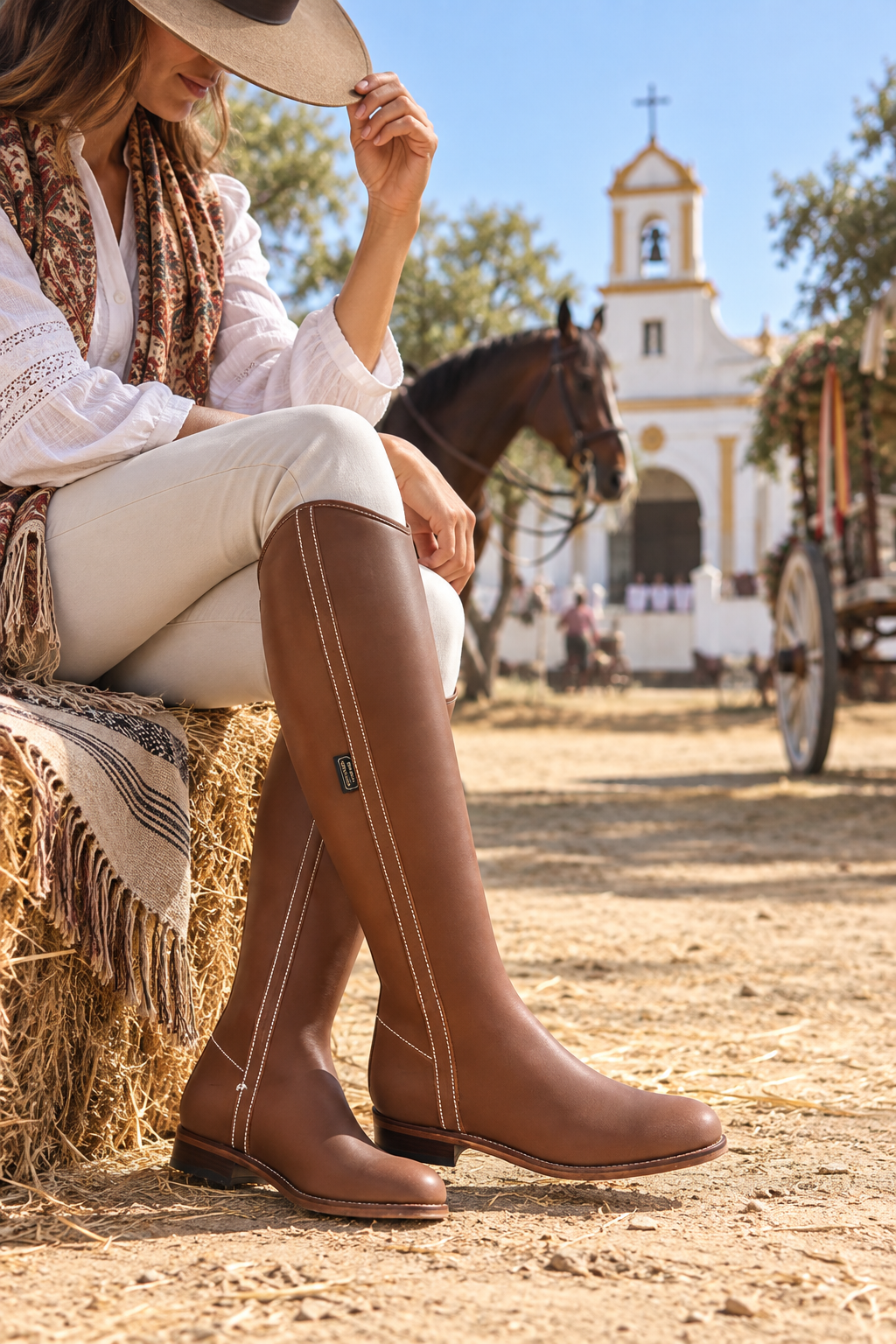
All that remains
is to choose your pair.
Cowboy boots, riding styles, country footwear, ankle boots and shoes. Different designs and uses, with the same origin: our workshop in Valverde del Camino.